
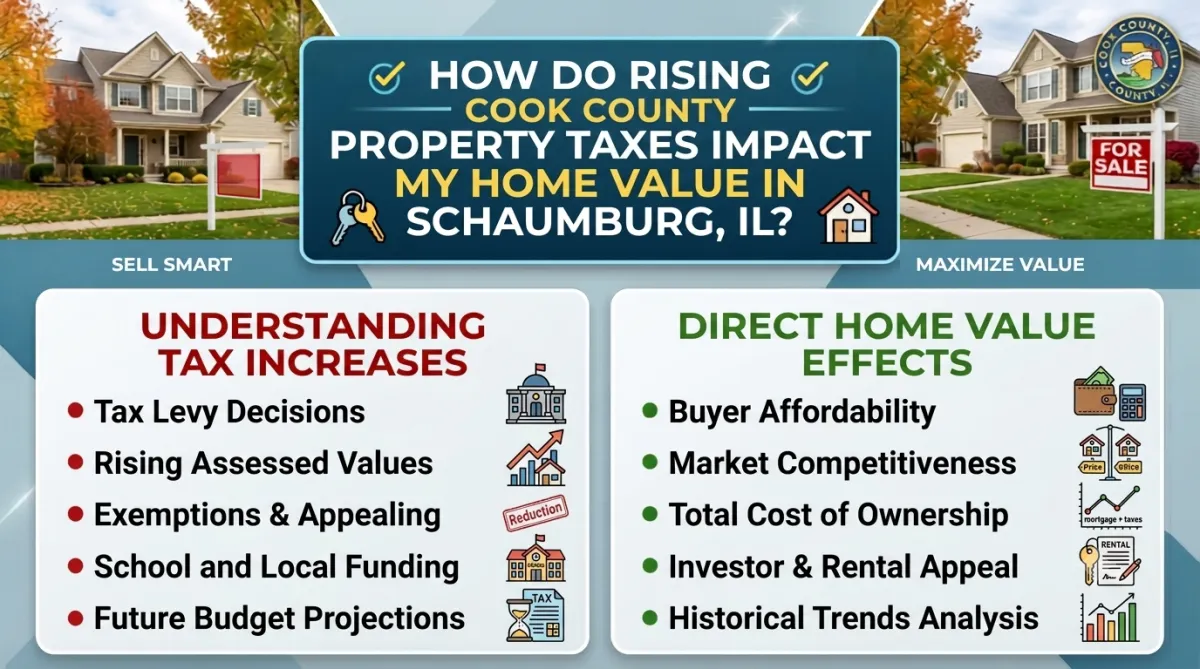
Impact of Cook County Taxes on Schaumburg Home Value
Real Estate, Property Taxes, Schaumburg IL
How Rising Cook County Property Taxes Impact Your Home Value in Schaumburg, IL
If you own a home in Schaumburg, you’ve probably felt the sting of rising Cook County property taxes. But how directly do those higher tax bills affect what your home is actually worth when you go to sell? This guide breaks down the connection between Cook County’s tax structure and Schaumburg home values in clear, practical terms.
First, a Quick Look at Cook County and Schaumburg Property Taxes
Cook County is known for complex and relatively high property taxes. Countywide, the effective property tax rate is estimated around 1.98% for 2026, with a median tax bill of about $6,053 on a median home value of $305,200, according to PropertyTaxRates.org. That’s lower than some Illinois counties, but still more than double the national average of roughly 0.9%–1.1%.
Schaumburg specifically sits on the higher end of that spectrum. Recent estimates show effective property tax rates in Schaumburg running roughly 2.05%–2.20%. Depending on the exact source and ZIP code, that translates to annual tax bills in the range of about $5,000–$6,400 on a typical home valued between roughly $244,000 and $312,000 (propertytaxbyzip.com, propertytaxbystate.com, levyio.com). In other words, a $300,000 Schaumburg home may carry a tax bill of around $6,000–$6,400 per year—about $500–$550 per month when you break it into housing costs.
How Higher Property Taxes Affect Buyer Affordability and Demand
The most direct way rising property taxes influence your home’s value is through buyer affordability. Buyers don’t just look at your listing price—they look at the full monthly cost of owning your home: mortgage, insurance, and yes, property taxes. When taxes climb, the monthly payment does too, even if prices stay the same.
At a 2.1% effective tax rate, a $350,000 home in Schaumburg might generate around $7,350 in annual taxes—over $610 per month just in property tax.
If taxes rise faster than incomes or interest rates ease, the pool of buyers who can comfortably afford that monthly cost shrinks.
Fewer qualified buyers usually means less upward pressure on prices. In extreme cases, very high taxes can push values down as buyers look instead to nearby suburbs with lower tax burdens. Schaumburg’s rates already exceed both the Illinois average (around 1.88%–2.07%) and the national average, so additional increases can make the area feel “expensive” compared with neighboring communities in DuPage or Kane counties.
💡 Key Idea: Property taxes act like a second mortgage payment. As that payment rises, many buyers compensate by shopping for lower-priced homes—or in lower-tax areas.
But It’s Not All Negative: When Higher Taxes Support Strong Amenities
Property taxes fund the very things that make Schaumburg attractive: schools, parks, police and fire protection, libraries, and local infrastructure. Many buyers are willing to accept a higher tax bill if they feel they’re getting strong value in return—especially in terms of school quality, public safety, and community amenities.
The 2026 housing data suggests that, despite high taxes, Schaumburg remains a solid, stable market:
Zillow reports average home values around $355,951, up about 5% year-over-year.
Realtor.com shows median list prices near $325,000, with a 6.2% annual increase and homes often selling at or very close to asking price.
Days on market are relatively low—often in the 23–48 day range—signaling steady buyer interest.
In simple terms, Schaumburg’s strong job access, retail base, and community services are helping to counterbalance the drag of higher taxes. For many buyers, the “total package” of the area still justifies the cost, which helps support home values even as tax bills creep up.
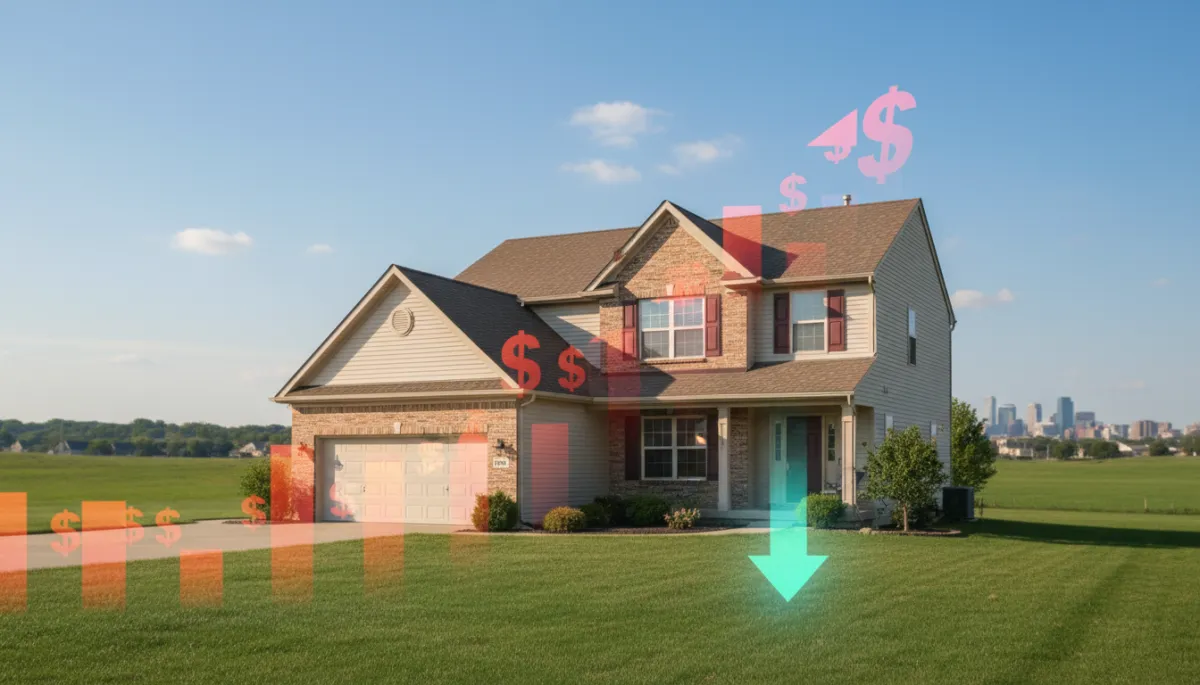
Strong local amenities can offset higher tax burdens and help sustain buyer demand.
The Cook County Assessment System: Why Your Tax Bill Can Jump Even in a Good Market
Another piece of the puzzle is how Cook County actually calculates your tax bill. Properties are reassessed on a triennial cycle. The county estimates your home’s market value, applies an assessment level, and then equalizes that value across the county to get the Equalized Assessed Value (EAV). Local taxing bodies—schools, the village, park districts, and more—then apply their composite tax rate to that EAV to determine your final bill.
When Schaumburg Township is reassessed and overall values jump, it doesn’t always mean every homeowner’s tax bill skyrockets. If the total assessed value of the area rises, but your individual property’s assessment rises less than average, your share of the tax burden may remain stable or even decrease. Conversely, if your home’s assessment increases more than your neighbors’, you could see a disproportionate hike in taxes—something that can make your home less attractive to buyers when compared with similar properties nearby.
💡 Pro Tip: Always review your reassessment notice. If your value looks out of line with recent sales in your neighborhood, consider filing an appeal or consulting a local tax professional.
Rising Taxes vs. Market Trends: What We’re Seeing in 2026
Even with elevated property taxes, Schaumburg’s 2026 market looks balanced to moderately competitive. Multiple data sources paint a similar picture:
Homes often sell at or around 100% of list price, with a meaningful share closing above asking (Zillow and Houzeo both show sale-to-list ratios around 100% or slightly higher).
Inventory is moderate—roughly 2 months of supply—which tends to support prices rather than push them down.
Foreclosure and distress levels are low, suggesting that most homeowners are managing their payments despite higher tax bills.
Forecasts for the remainder of 2026 generally call for 2%–4% price appreciation in Schaumburg, in line with broader Midwest expectations. That indicates that, at least for now, rising property taxes are slowing how fast prices climb rather than causing an outright drop in values.
Practical Ways Rising Taxes Can Influence Your Specific Home Value
While market averages are helpful, what really matters is how your particular home stacks up. Here are a few concrete ways higher Cook County taxes can shape your property’s value in Schaumburg:
Buyers compare tax bills side by side. When touring homes, many buyers look at estimated monthly payments on their lender’s app. If your home’s annual tax bill is $1,000–$2,000 higher than a similar property down the street, they may either offer less on your home or choose the cheaper option altogether.
High assessments can become a negotiation point. Savvy buyers will notice if your tax bill looks unusually high for the neighborhood. They may ask for a price reduction, request that you initiate an appeal, or factor future tax increases into a lower offer.
Appeals and exemptions can protect your value. If you successfully appeal an overinflated assessment or apply for exemptions—such as the homeowner, senior, or veteran exemptions—you can reduce the taxable value of your property. A more reasonable tax bill makes your home more competitive and can support a higher sale price.
What Schaumburg Homeowners Can Do Right Now
If you’re worried that rising Cook County property taxes are eroding your home’s value, there are several proactive steps you can take:
Audit your assessment. Compare your assessed value with recent sales of similar homes in your immediate area. If your assessment is significantly higher, consider filing an appeal within the county’s designated window.
Confirm every exemption you qualify for. Homestead, senior, disabled, and veteran exemptions can materially reduce your taxable value. Missing even one exemption can cost you hundreds or thousands of dollars each year.
Work with a local real estate professional. An experienced Schaumburg agent can show buyers how your taxes compare to similar listings, and help you price strategically so the total cost of ownership still looks attractive.
Highlight what taxes pay for. In your listing, emphasize strong schools, parks, community services, and local conveniences. When buyers feel they’re getting tangible value, they’re often more accepting of higher tax bills.
The Bottom Line: Do Rising Cook County Taxes Hurt Schaumburg Home Values?
Rising Cook County property taxes absolutely influence home values in Schaumburg—but the impact is complex, not one‑dimensional. On one hand, higher taxes raise the cost of ownership and can limit how fast prices climb, especially when compared with lower‑tax suburbs. On the other hand, those same taxes support the amenities, services, and stability that keep Schaumburg attractive to buyers and help prevent sharp price declines.
In 2026, the data suggests that Schaumburg is still experiencing modest appreciation and steady demand, even with above‑average tax rates. For individual homeowners, the key is to manage what you can control: ensure your assessment is fair, claim every exemption, and position your home so that buyers see strong value for the total monthly cost they’ll be taking on.
If you’re considering selling—or just want to understand how your tax bill compares—start by reviewing your assessment, talking with a trusted local agent, and exploring whether an appeal makes sense. Rising property taxes are a reality in Cook County, but with the right strategy, they don’t have to undermine your Schaumburg home’s long‑term value.