
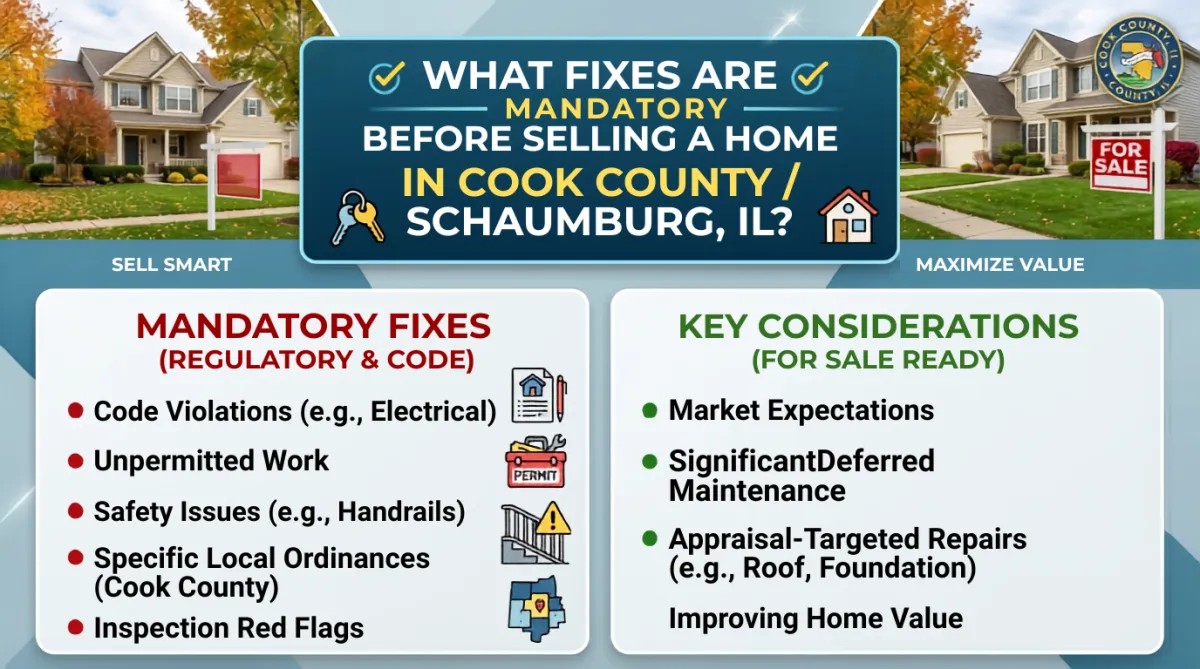
Mandatory Home Fixes Before Selling in Cook County
Real Estate, Home Selling, Cook County, Schaumburg IL
What Fixes Are Mandatory Before Selling a Home in Cook County and Schaumburg, IL?
If you’re preparing to sell a home in Cook County or Schaumburg, Illinois, you may be wondering which repairs are simply “nice to have” and which are truly mandatory. While buyers can accept some cosmetic issues, local codes, safety standards, and lender requirements can force certain fixes before you can successfully close. This guide breaks down the essentials so you can plan, budget, and avoid last‑minute surprises.
Start With the Big Picture: “Mandatory” vs. “Smart” Fixes
In Illinois, there is a difference between what the law requires and what the market expects. Mandatory fixes usually fall into three buckets:
Items required by state or local building, fire, or safety codes
Repairs required by the buyer’s lender or appraiser for financing approval
Work needed to close out open permits or code violations on record with the municipality
Cosmetic upgrades—like repainting, replacing dated fixtures, or redoing landscaping—are typically optional but can help you sell faster or for more money. The focus here is on what can legally or practically prevent a sale in Cook County and Schaumburg if left undone.
Mandatory Fixes Before Selling a Home in Cook County (County‑Level View)
Cook County is large and includes many municipalities, each with its own ordinances. However, several categories of repairs tend to be non‑negotiable across the county. Always confirm specifics with your local village or city hall, but use this as a practical checklist.
1. Life‑Safety Issues Identified by Inspection
Whether it’s a municipal inspection, a private buyer inspection, or an appraisal, anything flagged as an immediate safety hazard is likely to be treated as a mandatory repair. Common examples in Cook County include:
Missing or non‑functional smoke detectors on each level and near sleeping areas
Missing carbon monoxide detectors within required distances of bedrooms, especially in homes with gas appliances or attached garages
Exposed live wiring, open junction boxes, or other clear electrical hazards
Gas leaks, improperly vented furnaces or water heaters, or unsafe flues and chimneys
💡 Pro Tip: Replacing or installing smoke and carbon monoxide detectors is one of the quickest, least expensive ways to avoid a failed inspection or lender condition.
2. Structural and Major System Deficiencies
While not every crack or older system must be replaced, serious defects that affect the home’s safety or livability often must be addressed to satisfy appraisers and buyers’ lenders. In Cook County, these commonly include:
Significant foundation movement, failing support beams, or obvious structural instability
Roofs at the end of their life that are actively leaking or causing interior damage
Plumbing leaks that cause mold, rot, or unsanitary conditions
Heating systems that do not function or cannot safely heat the home
If the buyer is paying cash, they may accept these issues in exchange for a lower price. But if financing is involved—especially FHA, VA, or other government‑backed loans—expect the appraiser to require repairs or escrow arrangements before closing.
3. Code Violations and Open Permits
Many Cook County municipalities will not allow a transfer of ownership if there are unresolved code violations or open building permits on the property. Mandatory steps can include:
Correcting unpermitted work (such as basement finishes or deck additions) to bring them to code or, in some cases, removing the work entirely
Scheduling final inspections for permits that were never officially closed out
Paying any outstanding fines or re‑inspection fees related to previous violations
Before you list, it’s wise to check with your municipality or have your attorney or agent pull a report to see if anything is on record that must be cleared.
4. Health and Sanitation Problems
Conditions that create health risks are also treated as mandatory in most Cook County communities. Examples include:
Active sewage backups or non‑functional toilets and drains
Widespread mold caused by ongoing moisture issues that has not been professionally remediated
Severe pest infestations (rats, roaches, bedbugs) that violate local health codes
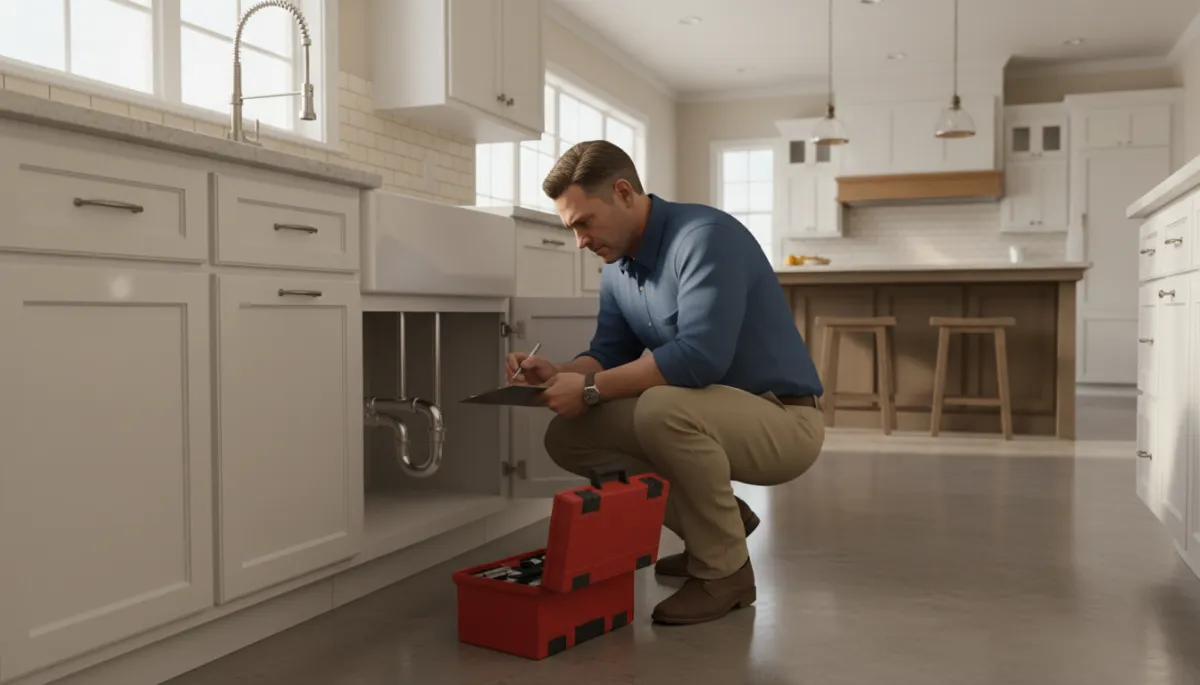
Addressing safety and plumbing issues early keeps your closing timeline on track.
What Fixes Are Mandatory Before Selling a Home in Schaumburg, IL?
Schaumburg is a village within Cook County, but it has its own ordinances, inspection practices, and expectations. While you should always verify current requirements with the Village of Schaumburg, several types of fixes are commonly required or strongly expected before a sale can proceed smoothly.
1. Compliance With Village Safety and Building Codes
Schaumburg enforces building and property maintenance codes similar to other Chicago suburbs. If the village conducts an inspection related to your sale—or if there are prior complaints—expect to address:
Properly installed and working smoke and carbon monoxide detectors as required by Illinois law and local code
Guardrails and handrails on stairs and decks that meet height and spacing rules
GFCI outlets in required areas like kitchens, bathrooms, garages, and exterior locations, where applicable
If these items are missing or outdated, Schaumburg can require corrections before issuing approvals tied to the sale, and buyers’ inspectors will almost certainly flag them as well.
2. Exterior Condition and Property Maintenance
Schaumburg, like many suburbs, pays close attention to exterior appearance and safety. While peeling paint alone may not kill a sale, certain exterior issues can become mandatory fixes if they violate code or impact safety, such as:
Broken or dangerously uneven sidewalks and front steps that create trip hazards, especially on village‑maintained portions
Loose, damaged, or missing siding and trim that exposes the structure to weather or pests
Fences or sheds installed without permits or not meeting setback or height rules
If the village has issued property maintenance citations in the past, you’ll likely need to address those items before or as part of the transfer process.
3. Mechanical Systems and Utility Safety
Schaumburg buyers—and their lenders—expect key systems to be safe and functional. While an older furnace or water heater doesn’t have to be brand new, these are typically treated as must‑fix items if they are unsafe or inoperative:
Furnaces or boilers that do not run, cannot maintain reasonable indoor temperatures, or are tagged unsafe by a technician
Water heaters that leak, are improperly vented, or lack required safety valves and discharge piping
Electrical panels with obvious hazards, such as double‑tapped breakers, missing covers, or severely outdated equipment flagged by inspectors
In many Schaumburg transactions, buyers will either insist that these issues be repaired before closing or negotiate a credit. However, when safety is clearly at stake, lenders may require actual repairs instead of simple price concessions.
4. Local Requirements That May Affect Your Sale
Schaumburg’s specific rules can change over time, but sellers often encounter requirements related to:
Ensuring sump pumps and stormwater systems discharge properly and not into sanitary sewers, where prohibited
Bringing bedroom egress (windows or doors) into compliance in basement bedrooms or converted spaces, if inspected
Correcting illegal conversions, such as unpermitted in‑law units or garage apartments, that violate zoning or safety codes
📌 Key Takeaway: In Schaumburg, anything that touches safety, zoning, or unpermitted work is far more likely to be treated as a “must fix” rather than a negotiable cosmetic issue.
How to Prepare: Practical Steps for Sellers in Cook County and Schaumburg
Knowing what might be mandatory is only half the battle. To avoid delays, consider taking these steps before you put your home on the market:
Order a pre‑listing inspection. A qualified home inspector can identify safety issues, obvious code concerns, and aging systems that buyers and appraisers will notice later anyway.
Check with your municipality. Ask the village or city if there are open permits, prior violations, or specific inspection requirements tied to property transfers in your area.
Prioritize safety and functionality. Address smoke/CO detectors, obvious electrical hazards, leaks, non‑working HVAC, and any visible structural or water intrusion issues first.
Discuss lender expectations with your agent. If your likely buyers will be using FHA or VA loans, your agent can help you understand which conditions those appraisers tend to flag in Cook County and Schaumburg.
Final Thoughts: Plan Ahead to Avoid Last‑Minute Roadblocks
Not every blemish must be fixed before you sell a home in Cook County or Schaumburg, but ignoring mandatory issues can derail your transaction, scare off buyers, or force you into rushed, expensive repairs under pressure. By focusing on safety, code compliance, and major system functionality, you’ll address the items most likely to be required by municipalities and lenders.
Before you list, work with a local real estate professional, inspector, and—when appropriate—your attorney to confirm the latest rules for your specific municipality. A bit of planning now can make your closing smoother, protect your sale price, and give both you and your buyer confidence that the home is ready for its next chapter.